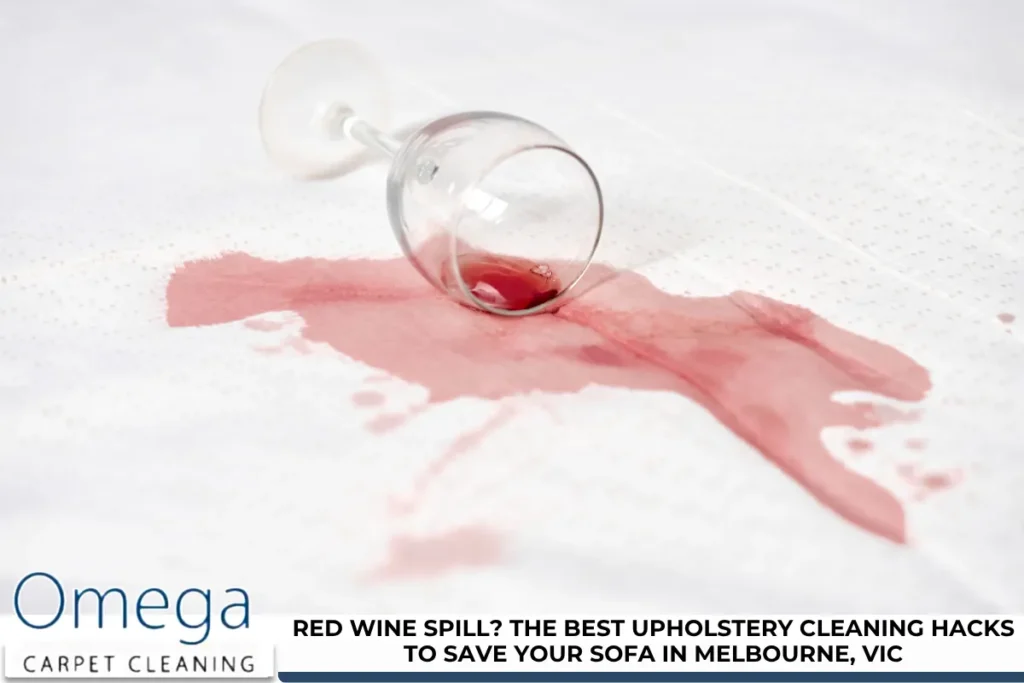

When a Glass of Red Turns Into a Costly Sofa Disaster
Upholstery cleaning becomes urgent the moment a deep red stain spreads across your sofa, turning a relaxing evening into a stressful mess. One accidental spill can soak into fabric fibres, leaving behind stubborn stains and lingering odours. The longer it sits, the worse it gets—especially in Melbourne homes where humidity can lock in moisture and promote mould. Panic often leads to scrubbing, which only pushes the stain deeper into upholsteries. The good news? With the right techniques, tools, and timing, you can reverse the damage. This guide walks you through proven sofa cleaning hacks and practical upholstery washing methods to restore your furniture quickly and effectively.
Why Red Wine Is One of the Toughest Upholstery Stains
Red wine is notoriously difficult to remove because of its composition. It contains tannins, pigments, and natural dyes that bind quickly to fabric fibres. Once absorbed, these compounds create a stain that becomes harder to treat over time.
The Science Behind the Stain
- Tannins act like natural dyes and attach to fibres
- Anthocyanins give wine its deep red color and stain easily
- Sugars leave sticky residue, attracting dirt
- Acidity helps the stain penetrate deeper into upholsteries
In Melbourne’s varying climate, stains can set faster due to temperature fluctuations, making quick action critical.
Immediate Action Steps After a Spill
Timing is everything when it comes to sofa cleaning. Acting fast can prevent permanent damage.
Step-by-Step Emergency Response
- Blot, don’t rub
Use a clean cloth or paper towel to absorb excess wine. Rubbing spreads the stain. - Apply cold water
Lightly dampen the area to dilute the wine. - Blot again
Continue blotting until no more liquid transfers. - Avoid heat
Heat can set the stain permanently. - Test cleaning solutions
Always test on an inconspicuous area first.
These initial steps are essential before using any upholstery cleaner or upholstery washer.
Proven Household Upholstery Cleaning Hacks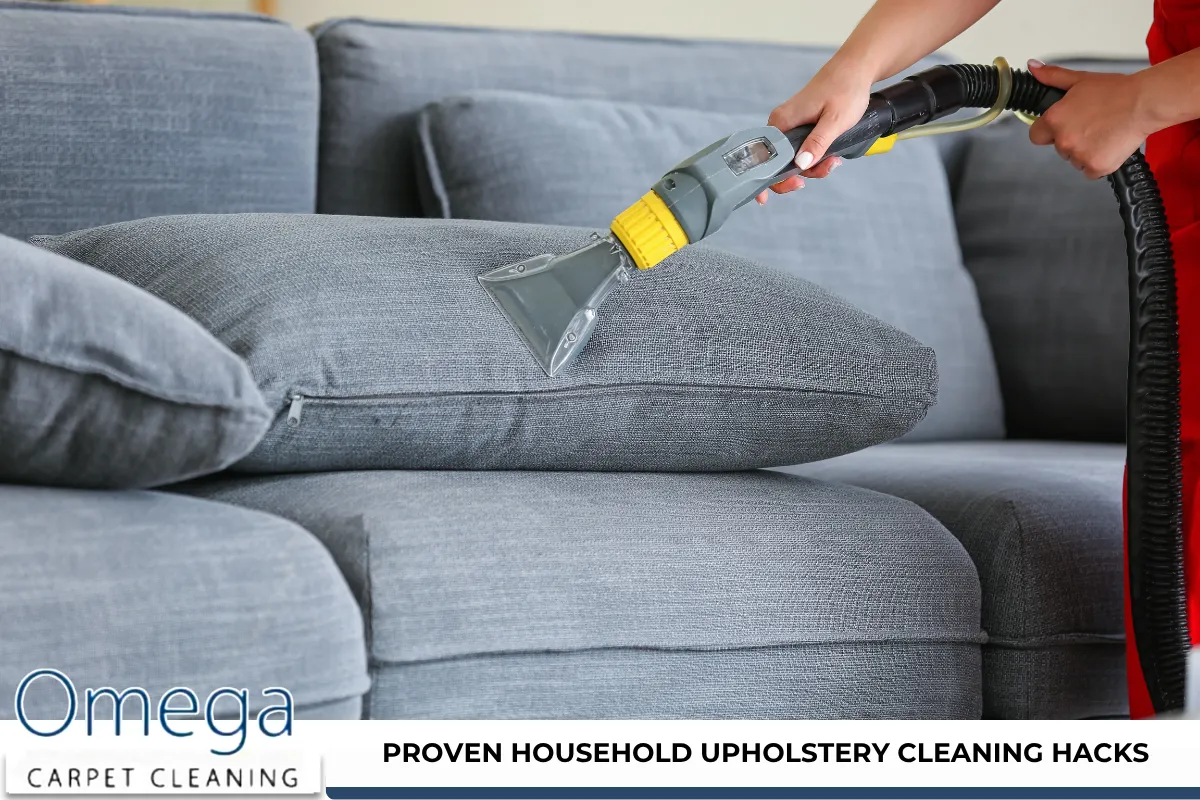
You don’t always need professional equipment to tackle stains. Many effective upholstery washing solutions can be made at home.
Salt Absorption Method
Salt works by drawing moisture out of the fabric.
- Sprinkle salt generously over the stain
- Let it sit for 10–15 minutes
- Vacuum or brush off residue
Baking Soda Paste
A gentle yet effective cleaner for fabric upholsteries.
- Mix baking soda with water
- Apply to the stain
- Let it dry before vacuuming
White Vinegar and Dish Soap Solution
This combination helps break down tannins.
- 1 tablespoon dish soap
- 1 tablespoon white vinegar
- 2 cups warm water
Apply with a cloth, blot gently, and rinse with clean water.
When to Use a Commercial Upholstery Cleaner
Sometimes DIY methods aren’t enough, especially for older or deep-set stains.
Choosing the Right Product
Look for:
- Fabric-safe formulas
- Non-toxic ingredients
- Low-moisture solutions
- Australian compliance standards
In Victoria, cleaning products must comply with safety regulations regarding chemical handling and disposal. Always follow label instructions.
How to Use an Upholstery Washer Effectively
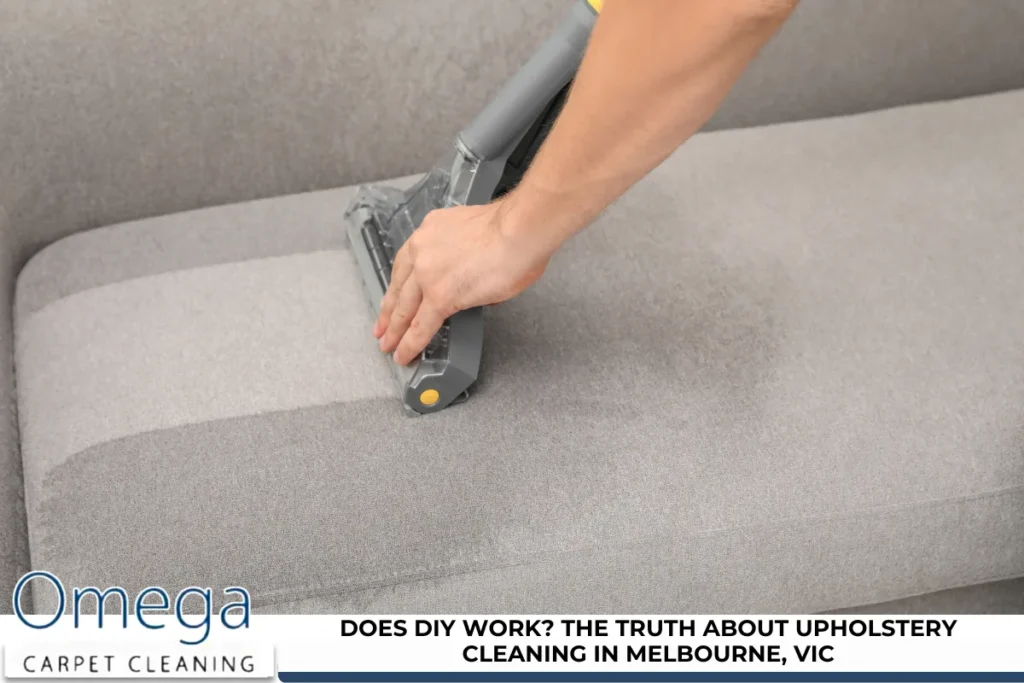
An upholstery washer can provide deeper cleaning than manual methods.
- Vacuum first to remove loose debris
- Apply cleaning solution evenly
- Use controlled water extraction
- Allow proper drying time
Avoid over-wetting, as excess moisture can lead to mould growth.
Fabric Types and How They Affect Sofa Cleaning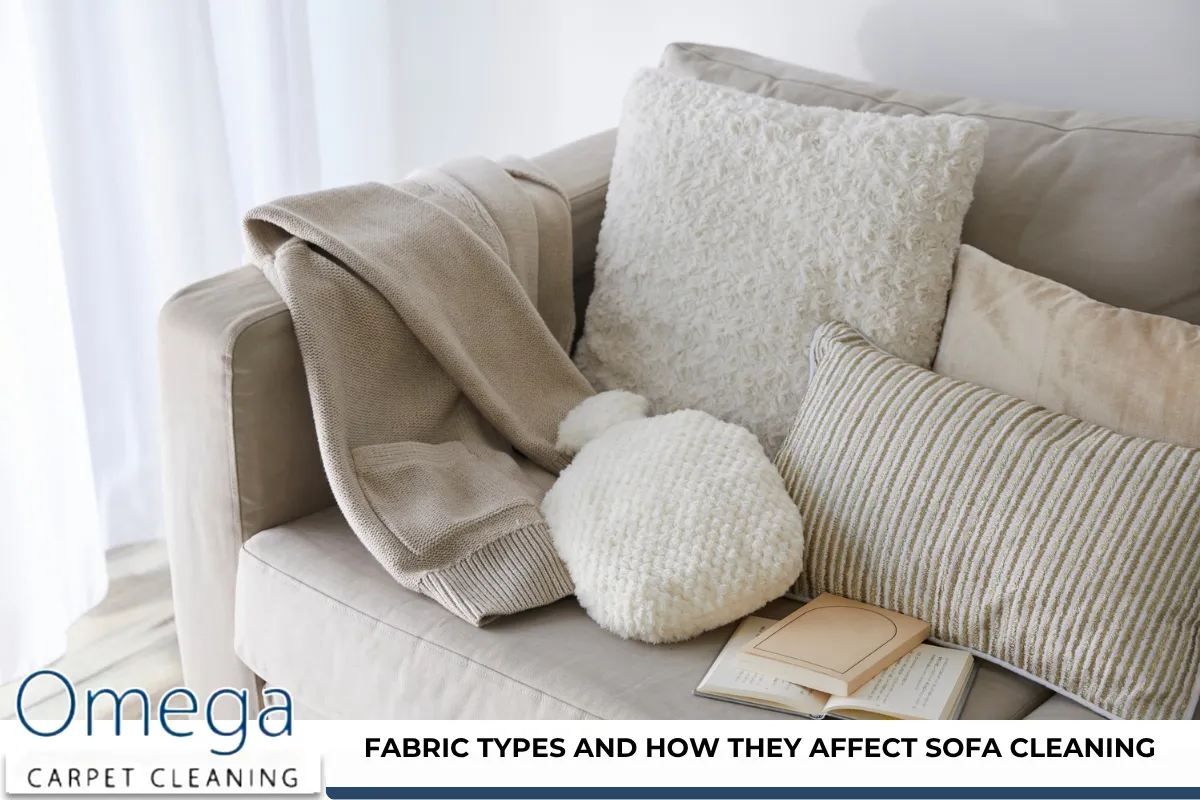
Different materials require different approaches. Using the wrong method can damage your furniture.
Common Upholstery Materials
Microfiber
- Durable and stain-resistant
- Responds well to alcohol-based cleaners
Cotton
- Absorbs stains quickly
- Requires gentle upholstery washing
Leather
- Needs specialised products
- Avoid water-based cleaning
Synthetic Blends
- Easier to clean
- Compatible with most upholstery cleaner solutions
Always check the manufacturer’s care label before cleaning.
Read Which Upholstery Cleaning Method is Best for Delicate Fabrics in Melbourne, VIC?
Mistakes That Make Stains Worse
Even with good intentions, certain actions can worsen the damage.
What to Avoid
- Scrubbing aggressively
- Using hot water
- Mixing cleaning chemicals
- Over-saturating the fabric
- Ignoring drying time
These mistakes can spread stains, damage fibres, and create long-term issues.
Melbourne-Specific Considerations for Upholstery Washing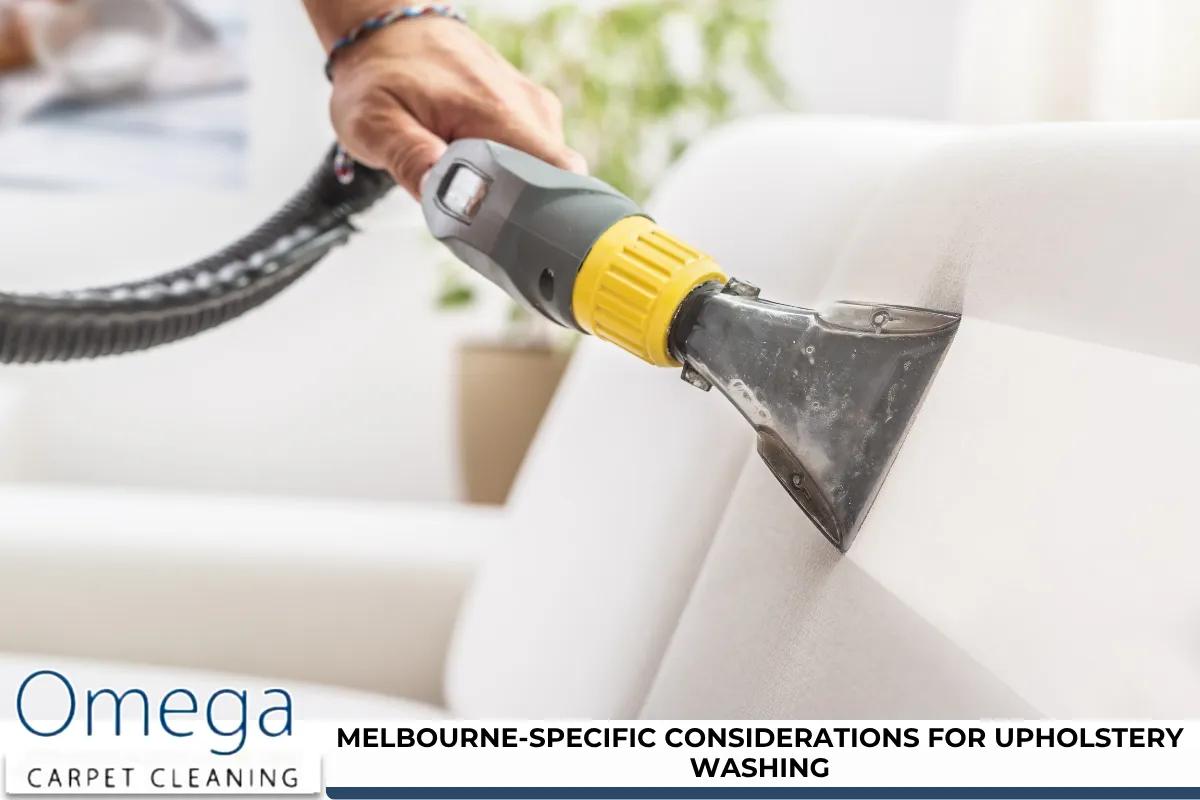
Living in Melbourne means dealing with unique environmental factors that affect sofa cleaning.
Climate Impact
- Humidity can slow drying
- Temperature swings affect stain absorption
- Indoor air quality influences odour retention
Local Regulations and Safety
In Victoria:
- Wastewater from cleaning must be disposed of properly
- Chemical use must comply with safety standards
- Professional cleaners must follow environmental guidelines
This ensures safe and responsible upholstery cleaning practices.
Preventing Future Sofa Stains
Prevention is just as important as cleaning.
Practical Tips
- Use fabric protectors
- Keep throws or covers on high-use areas
- Clean spills immediately
- Schedule regular upholstery cleaning
- Avoid eating or drinking on sofas
Consistent maintenance keeps upholsteries looking fresh and extends their lifespan.
When Professional Sofa Cleaning Is the Smart Choice
There are times when calling an expert is the best solution.
Signs You Need Help
- Stains won’t lift after multiple attempts
- Odours persist
- Fabric shows signs of damage
- Large or multiple stains
- Delicate or antique furniture
Professional upholstery washer systems use advanced extraction methods that deliver deeper results without damaging fabric.
Read How Often Should You Book Carpet Cleaning in Melbourne’s Climate?
Upholstery Cleaning in Melbourne, VIC – Omega Carpet Cleaning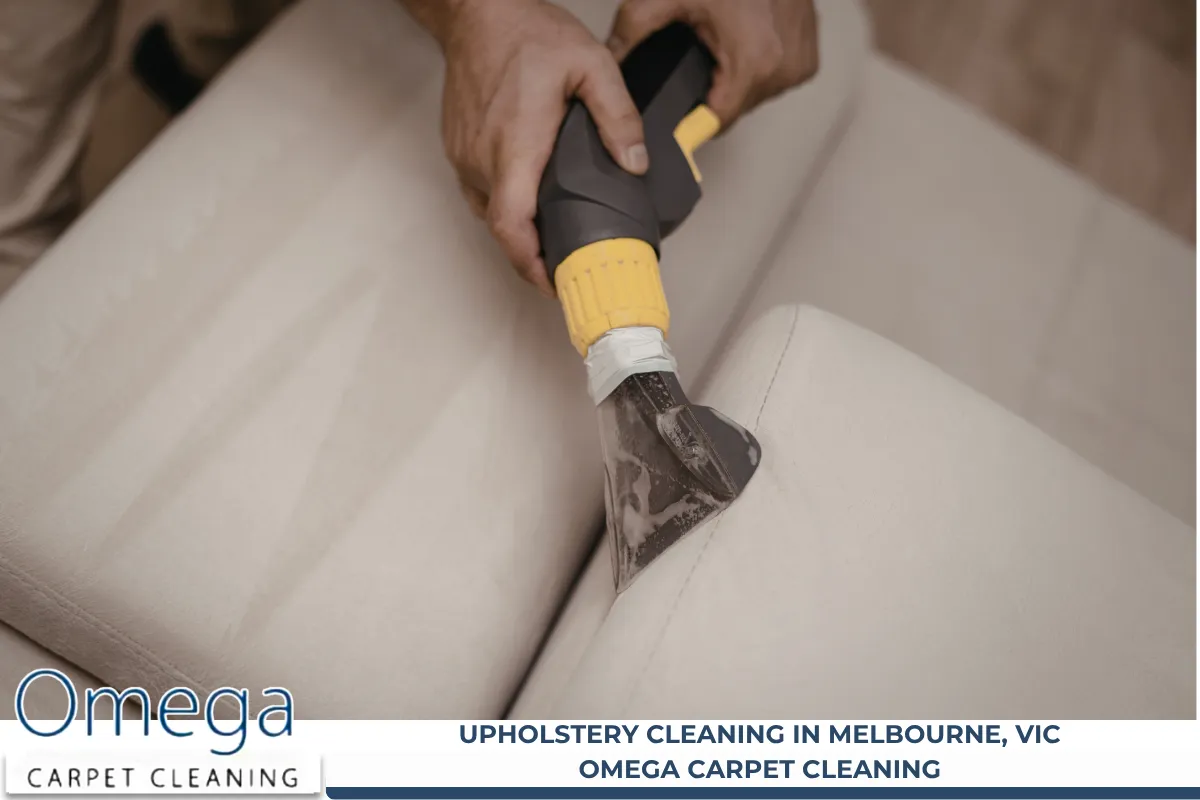
At Omega Carpet Cleaning, we understand how frustrating a stubborn stain can be. That’s why we offer reliable upholstery cleaning services across Melbourne, Victoria and surrounding areas. We use advanced equipment and proven upholstery washing techniques to safely restore your furniture without damaging delicate fabrics. Our team is trained to handle everything from fresh spills to deep-set stains, ensuring your sofa looks and feels refreshed. We take pride in delivering fast, professional service you can trust. Call us today at 0406 996 819 or fill out our contact form to book your service. Let us handle the hard work and bring your upholsteries back to life.
Keeping Your Sofa Looking Like New Year-Round
Maintaining your furniture doesn’t have to be complicated. With the right habits and occasional deep sofa cleaning, you can keep your home looking clean and inviting.
Regular care, combined with smart cleaning techniques, ensures your upholsteries remain comfortable, hygienic, and visually appealing. Whether you’re dealing with a sudden spill or long-term wear, knowing how to respond makes all the difference.
Frequently Asked Questions
How often should I schedule upholstery cleaning in Melbourne homes?
In Melbourne, upholstery cleaning should ideally be done every 12 to 18 months, depending on usage. Homes with pets, children, or high foot traffic may require more frequent sofa cleaning. Dust, allergens, and moisture can build up over time, especially with Melbourne’s changing climate. Regular upholstery washing helps maintain hygiene, prolong fabric life, and improve indoor air quality. If you notice dullness, odours, or visible dirt, it’s a sign your upholsteries need attention sooner rather than later.
Can red wine stains come back after cleaning?
Yes, red wine stains can reappear if not properly treated. This is known as “wicking,” where moisture brings hidden residue back to the surface as the fabric dries. Using too much water during upholstery washing can contribute to this issue. To prevent it, ensure thorough extraction and proper drying. Professional upholstery cleaner methods often include deep extraction techniques that minimise the risk of stains returning after cleaning.
Is steam cleaning safe for all types of upholsteries?
Steam cleaning is effective but not suitable for all materials. While it works well for durable fabrics, delicate materials like silk or certain blends may be damaged by heat and moisture. Always check the care label before using a steam-based upholstery washer. In some cases, low-moisture or dry cleaning methods are safer alternatives. Using the wrong technique can shrink or weaken fibres, so it’s important to match the method to the material.
What causes lingering odours after sofa cleaning?
Lingering odours are usually caused by trapped moisture, bacteria, or incomplete cleaning. If the upholstery washer doesn’t extract enough water, it can lead to dampness that promotes odour buildup. Additionally, spills that penetrate deep into cushions may require more thorough treatment. Proper ventilation and drying are essential after upholstery cleaning. In some cases, deodorising treatments or professional services may be needed to fully eliminate smells.
Are DIY upholstery cleaning methods as effective as professional services?
DIY methods can be effective for minor stains and maintenance, but they often lack the power of professional equipment. Household solutions may not fully remove deep-seated dirt or bacteria. Professional upholstery cleaner services use specialised tools and techniques that provide deeper cleaning and faster drying. While DIY approaches are useful for quick fixes, professional sofa cleaning is recommended for long-term care and tougher stains.
Important Note for Readers: This article provides general upholstery cleaning guidance. Always follow manufacturer care instructions and local safety regulations in Victoria. For delicate fabrics or severe stains, professional cleaning is recommended to avoid damage or health risks.
Read Why Real Estate Agents Demand Professional Carpet Cleaning in Melbourne VIC