
Why Office Coffee Stains Keep Coming Back After Spot Cleaning
Office carpet cleaning ranks among the most requested services in Melbourne workplaces, and the number one frustration driving those calls is coffee stains that refuse to stay gone. You spill your long black or flat white, blot the area, spray some cleaner, and the carpet looks fine. Then two days later, a faint brown ring sits in the same spot, sometimes worse than before.
It is embarrassing when clients visit and notice discoloured patches near the boardroom. Staff get frustrated scrubbing the same area every week. Reception teams start covering marks with furniture, which only delays the real fix.
The short answer to why this happens comes down to three things: a process called wicking that draws residual coffee back to the surface during drying, detergent residue that traps fresh dirt, and incomplete removal of staining agents buried deep in the carpet backing and underlay. Understanding the structure of your office carpet and the chemistry of coffee makes the solution far more obvious than most people expect.
Key Takeaways
- Recurring coffee marks in Melbourne offices are usually caused by deep wicking, detergent residue left in the backing, or incomplete extraction during spot treatment.
- Repeated DIY spot cleaning can push carpet stains deeper, damage carpet fibres, and leave sticky residue that attracts new soil within days.
- Commercial hot water extraction, commonly known as steam cleaning, is the most reliable cleaning method for stopping stains from reappearing because it reaches the backing and underlay.
- Regular office carpet cleaning reduces staining, controls odours, supports indoor air quality, and helps meet hygiene and workplace safety expectations across Victorian commercial premises.
- Professional cleaning can extend carpet life by years when combined with prompt spill response and scheduled deep cleaning.
How Commercial Office Carpets Are Built – And Why It Matters for Coffee Spills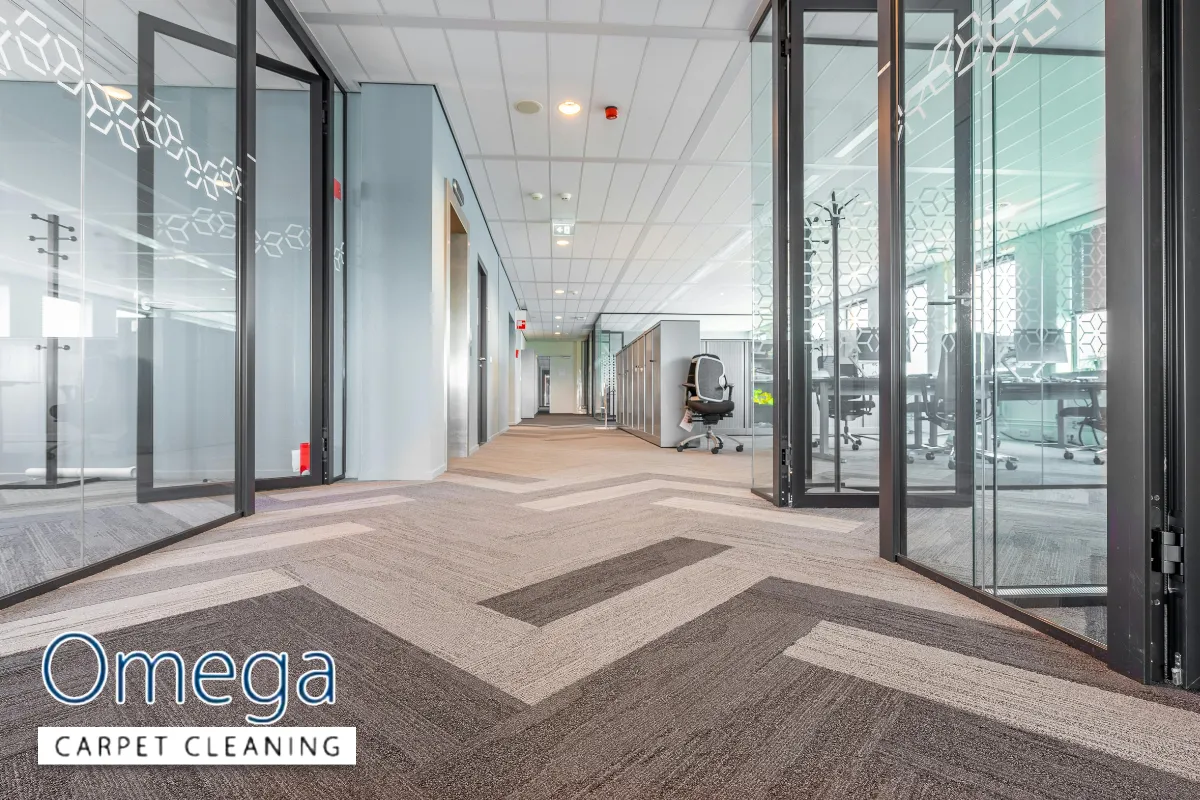
Most Melbourne CBD and suburban offices use either broadloom carpet or modular carpet tile. Both share a layered construction that directly affects how spills behave.
At the top sits the fibre pile, typically a loop or cut pile in a low-profile design suited to wheeled chairs and high traffic areas. Beneath the pile is a primary backing, then a secondary backing made from PVC, bitumen, or felt. In many installations, adhesive bonds the tile to concrete slab or an underlay layer.
Common fibre types in commercial settings include:
- Nylon and solution-dyed nylon (SDN), which resist wear and fading but absorb water-based liquids readily because of their hydrophilic nature.
- Polypropylene (olefin), which is naturally hydrophobic so coffee beads initially, but flattens under traffic and loses that advantage over time.
- Wool blends, which absorb moisture deeply and can react with tannins in coffee if not treated quickly.
Coffee does not just sit on top of the pile. Gravity and capillary action pull liquid through the fibres and into the backing within seconds, especially on low-profile loop carpet. Carpet thickness and pile density influence how fast that happens, but every carpet type is vulnerable once liquid reaches the joins and adhesive layer. Coffee contains tannins that bond tightly to carpet fibers, and when sugar or milk is added, the mixture becomes even more adhesive at depth.
The Science of Wicking: Why Coffee Stains Disappear When Wet but Return When Dry
Wicking is the single most common reason a coffee stain keeps reappearing at the same spot. Wicking occurs when moisture from deep within the carpet rises to the surface as the surrounding area dries. It is essentially capillary action working in reverse: liquid moves upward through fibre channels just like water climbing a paper towel dipped into a glass.
Here is what happens step by step:
- Coffee spills onto the pile and soaks downward into the backing and underlay.
- You blot or scrub the surface, and the visible stain disappears.
- Residual coffee, dissolved tannins, and sugars remain trapped in the lower layers.
- As the carpet dries over the next few hours, evaporation pulls that moisture upward.
- The dissolved stain material travels with the moisture and deposits on the surface as a brown ring or halo.
Deep contamination from coffee can result in stains that return after cleaning, sometimes repeatedly, because each spot treatment adds significantly more moisture without extracting from below. Over-wetting during DIY carpet washing pushes the staining agents further into the underlay, creating a larger reservoir for future wicking.
Melbourne’s climate adds another variable. Humidity can slow down the carpet drying process, increasing the chance of wicking. Late summer and early autumn cleaning sessions in offices without strong HVAC airflow are particularly prone to this because the carpet stays damp for longer, giving more moisture time to carry pigment upward.
Common DIY Mistakes That Make Office Coffee Stains Come Back Stronger
Reception staff and in-house cleaners usually mean well, but the methods they reach for often do more harm than good. Here are the most frequent errors seen in Melbourne offices:
- Aggressive scrubbing with stiff brushes or rough cloths, which distorts the carpet pile, fuzzes fibres, and drives coffee deeper into the backing.
- Reaching for dishwashing liquid or generic kitchen spray, which contain surfactants that leave a tacky film once dry.
- Using coloured supermarket carpet spotters that can themselves deposit dye onto light-coloured carpet fibres.
- Applying too much liquid, then walking away without extracting it. Over-wetting during cleaning can push stains deeper into the carpet, expanding the stained zone well beyond the original spill.
The cleaning solutions most people grab from under the kitchen sink are designed for hard surfaces, not porous fibre. Without proper rinsing and extraction, chemicals and coffee residue sit in the backing and wick up repeatedly after each light clean by janitorial staff. Stains may persist if not treated promptly after spilling, and each failed attempt makes the next one harder.
Read Office Carpet Cleaning in Melbourne, VIC: Can You Remove Adhesive Residue from Floor Signs?
Why Detergent and Spotter Residue Attracts New Dirt in Busy Melbourne Offices
Many off-the-shelf stain removers leave a slight detergent film on carpet fibres if not rinsed and extracted thoroughly with a professional carpet cleaner. In a quiet home, that film might go unnoticed for weeks. In a busy Melbourne office with dozens of people tracking in surface dirt on shoes, trolley wheels, and chair castors, it becomes a magnet.
Sticky cleaning residues can attract new dirt to cleaned areas, and what looks like a returning coffee stain is often a combination of remaining coffee pigment and fresh grime bonding to the residue left by the original cleaner. Improper rinsing of cleaning agents can lead to visible stains that darken over time as more soil accumulates in the treated patch.
Coffee stains can reappear due to residue left behind from both the spill and the spotter. A periodic professional cleaning session with a neutralising rinse strips these deposits, resets the fibre surface, and reduces rapid re-soiling across the entire floor. Using eco-friendly solutions also helps prevent coffee stain re-soiling because they tend to leave less sticky residue compared with heavy-duty detergent-based products.
When Coffee Has Permanently Damaged Office Carpet Fibres
Not every coffee stain can be fully reversed. Spills that sit for days, especially those containing sugar and milk, can chemically affect carpet dyes over time. Heat from well-meaning DIY attempts with hot water or steam irons can set tannins permanently, bonding them to fibre at a molecular level.
On certain backings and fibre blends, tannins cause yellowing or discolouration that no amount of cleaning will completely eliminate. Professional cleaning may be needed for stubborn stains that have penetrated deeply, but even then, the result may be improvement rather than total removal.
Office managers should set realistic expectations. Early intervention by a trained technician typically has a much higher success rate. When damage is irreversible, patching individual carpet tiles or replacing a section of broadloom may be the only path to a uniform appearance. This is one reason modular tile formats remain popular in Melbourne commercial fitouts: a single damaged tile can be swapped without replacing an entire room.
How Professional Steam Cleaning Stops Recurring Coffee Stains in Offices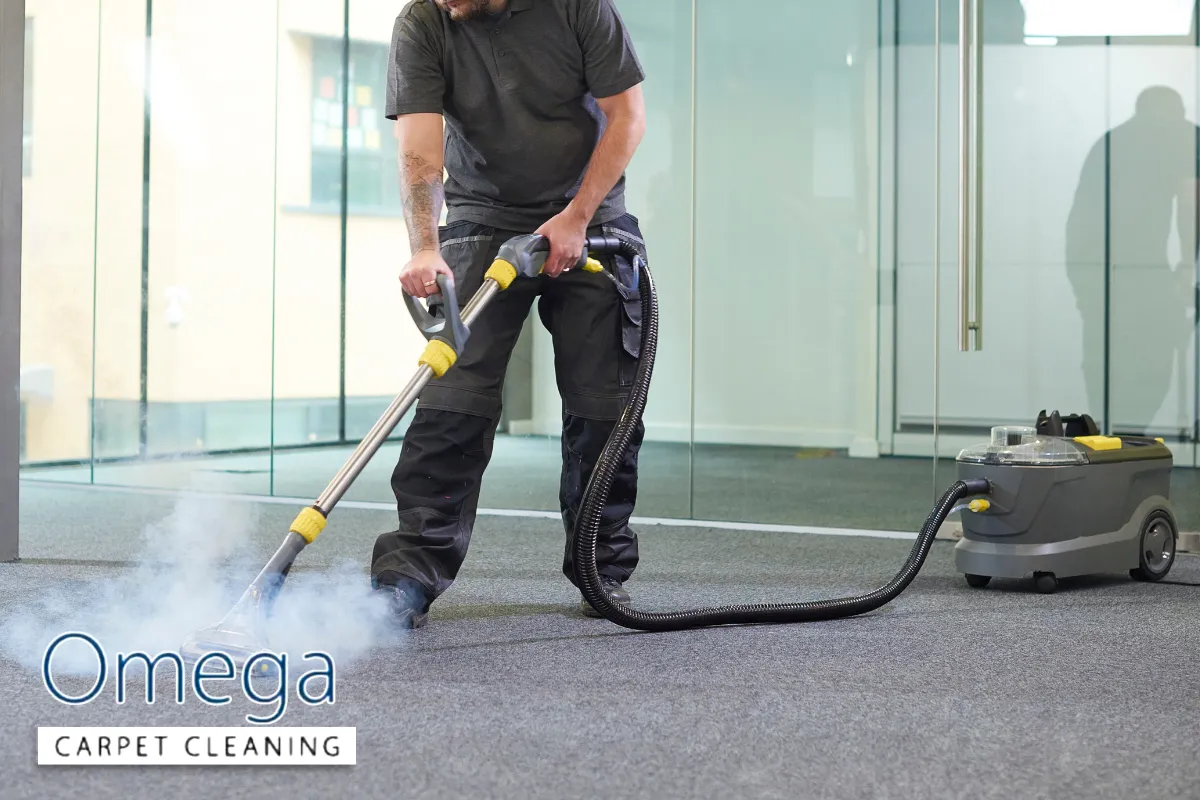
Professional carpet cleaning tackles the root cause that DIY methods miss. The process generally follows four stages:
- Pre-treatment with a solution formulated for tannin-based stains, breaking the bond between coffee pigment and fibre.
- Agitation to loosen deep seated dirt and embedded dirt from the pile and backing.
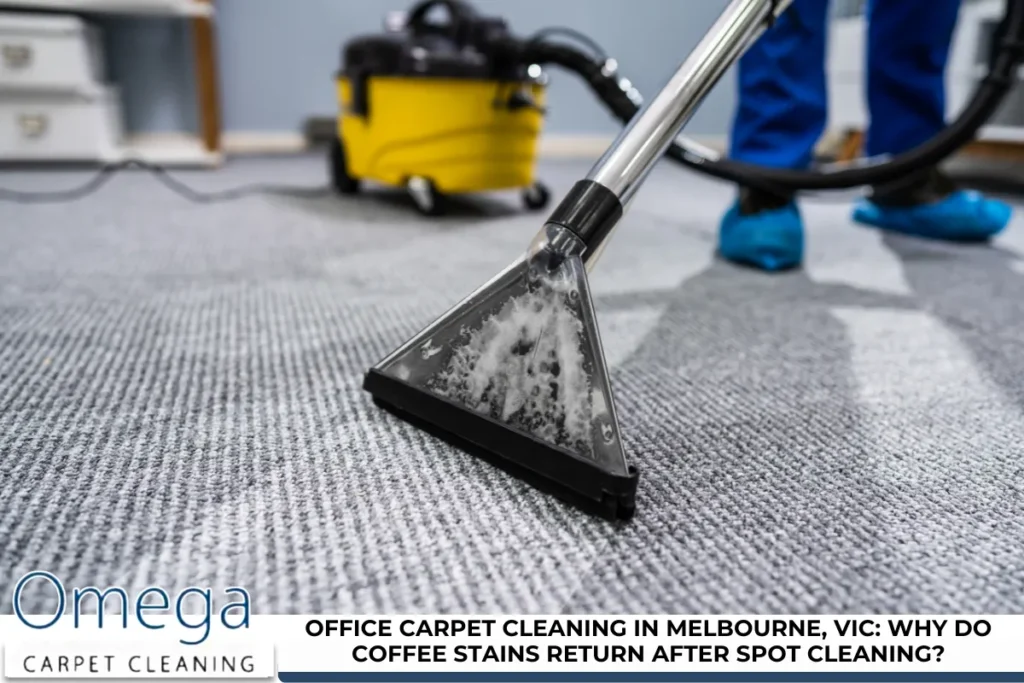
- Hot water extraction, where heated water is injected under pressure and immediately vacuumed out, removing dissolved contaminants from every layer.
- Post-treatment spotting for any remaining marks, followed by grooming the pile.
Steam cleaning is recommended by carpet manufacturers for deep cleaning because commercial-grade truck-mounted systems achieve higher temperatures, water pressure, and suction than any domestic carpet washer or rental unit. Professional carpet cleaning can remove 95% of water and cleaning solution during extraction, which is critical for preventing wicking. Steam cleaning also removes 95% of dirt and allergens, making it a strong choice for allergy sufferers sharing open-plan workspaces.
Most carpets dry in 6 to 8 hours after professional cleaning when truck-mounted systems are used. Dry cleaning methods like encapsulation cleaning use low moisture for quick drying and can have carpets ready in 30 to 60 minutes, though they are less effective at removing stubborn stains from the backing. The use of fans and commercial air movers can help speed up drying and reduce the risk of wicking, and scheduling the job after hours gives the carpet a few hours of undisturbed drying time before staff return.
For removing stubborn stains, technicians carry specialised acidic spotters and oxidisers that target tannins without damaging the fibre. This level of deep stain removal is simply not available from retail products, which is why professional results differ so dramatically from repeated DIY efforts. Professional cleaning can remove up to 95% of stains when the right cleaning method and equipment are matched to the carpet type.
Practical Steps Staff Can Take Immediately After a Coffee Spill at Work
Speed matters more than technique. Here is a simple response plan any office team can follow:
- Blot immediately using white paper towels or a clean white cloth. Press firmly and lift. Never rub or scrub.
- Work from the outer edge of the spill inward to avoid spreading it.
- Apply a small amount of cool water, then blot again. Avoid hot water, which can set tannins and proteins from milk.
- If the office has a neutral pH spotter approved for the carpet fibre, apply sparingly and blot. Do not saturate the area.
- Place a folded white towel over the spot with a small weight on top to draw out remaining moisture while the carpet dries.
Consider assembling a simple spill kit for your Melbourne office:
- Neutral pH carpet spotter
- Clean white towels or absorbent cloths
- Disposable gloves
- Laminated instruction card posted near the coffee machine
For large spills or repeat incidents in the same area, document the event and notify building management. A professional cleaning service can treat affected zones before the stain sets permanently, which dramatically improves the odds of complete stain removal.
Maintaining Office Carpets in Melbourne: Cleaning Frequency and Legal Considerations
Cleaning frequency for commercial premises should vary depending on foot traffic, spill exposure, and carpet fibre. As a general guide for Victorian offices:
- High-traffic commercial spaces such as lobbies, meeting rooms, and staff kitchens may require cleaning every 3 to 4 months.
- General open-plan office areas benefit from deep cleaning every 6 to 12 months.
- Natural fiber carpets can be cleaned about every 12 months, while synthetic fiber carpets may only require an annual clean under normal conditions.
- Carpets should be cleaned every 12 months at minimum for hygiene, regardless of visible soiling.
Regular professional cleaning helps control dust mites, improves indoor air quality, and supports a healthier environment for allergy sufferers in shared workplaces. Professional cleaning can extend carpet life by removing embedded dirt that grinds away fibres from below, and it plays a direct role in removing dirt that vacuuming alone cannot reach.
Under Victorian workplace health and safety obligations, employers and building managers are expected to maintain clean, safe floor coverings to reduce slip hazards, allergen load, and odour issues. Lease carpet cleaning requirements often specify that tenants must provide evidence of regular professional cleaning at handover. Coordinating with property managers to include periodic deep cleaning carpets schedules and spill response procedures in cleaning contracts is a practical step that protects both the carpet and the tenancy.
Choosing the Right Carpet Cleaner for Coffee Stains in Your Melbourne Office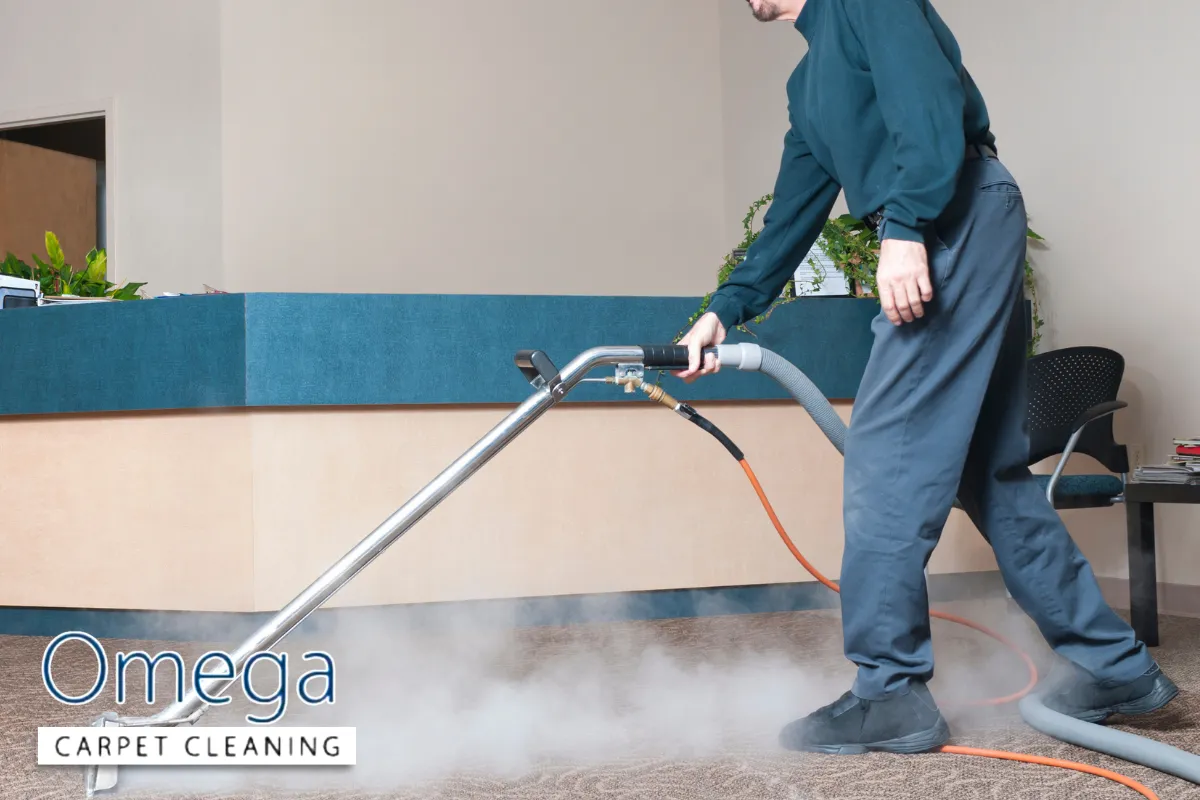
Not every melbourne carpet cleaning service handles office environments the same way. Here are the criteria worth checking:
- Technicians trained to industry standards with experience in commercial carpet care, not just residential carpet cleaning.
- Modern hot water extraction equipment, ideally truck-mounted for faster drying and stronger suction.
- Clear communication about how they treat recurring coffee stains, what products they use on specific fibres, and realistic drying time estimates.
- Flexibility to schedule after-hours or weekend work so the job does not disrupt staff. Look for providers that offer same day carpet cleaning when urgent spills demand it.
- Transparent pricing with no hidden fees or hidden charges. Costs will vary depending on property size, soil level, and access requirements.
- The business should be fully insured to protect your premises against water damage or accidental issues during cleaning.
Melbourne carpet cleaners who also provide rug cleaning, upholstery cleaning, mattress cleaning, and grout cleaning can keep your entire workspace consistent in one visit. Carpet cleaning services are available for both residential and commercial properties, so confirm the provider you choose has genuine commercial experience and not just a domestic setup.
Ask for references from other Melbourne offices, and check whether the provider uses a neutralising rinse step to prevent the re-soiling cycle that plagues so many workplaces. Encapsulation cleaning is worth considering as an interim melbourne service between full extractions for offices that cannot tolerate any downtime.
Office Carpet Cleaning in Melbourne, VIC – Omega Carpet Cleaning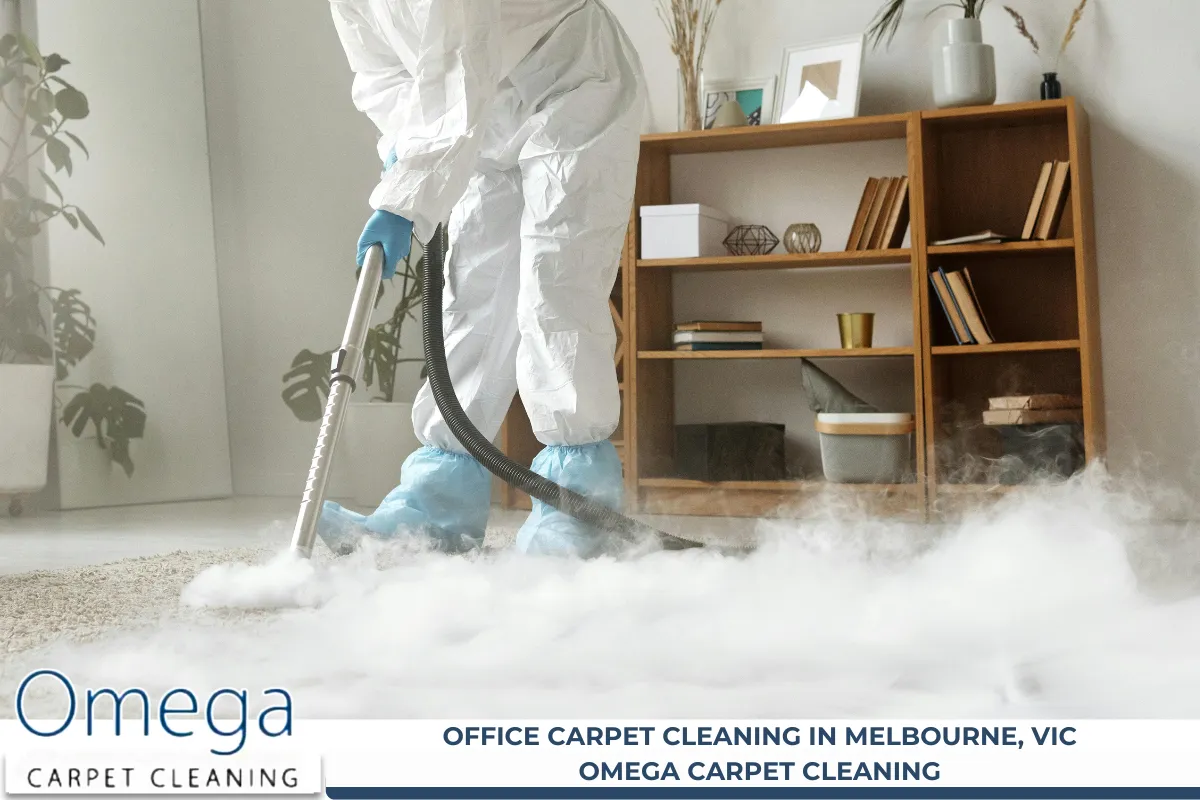
We are Omega Carpet Cleaning, and we specialise in office carpet cleaning across Melbourne, Victoria and surrounding areas. Our experienced team understands exactly why coffee stains return and how to stop the cycle using advanced hot water extraction, targeted stain removal products, and controlled drying techniques.
Whether you are dealing with a single stubborn mark near the coffee machine or need a full office deep clean, we deliver professional results with minimal disruption to your workday. We handle everything from carpet steam cleaning and upholstery to tile and grout, and we keep our pricing straightforward with no surprises.
Call us on 0406 996 819 or fill out our online contact form to book your next clean. We offer flexible scheduling, after-hours availability, and the kind of professional carpet cleaning that keeps Melbourne offices looking sharp and client-ready.
Frequently Asked Questions
How Can We Reduce Coffee Spill Frequency in Our Office?
Small environmental changes make a measurable difference. Encourage staff to use lidded travel mugs instead of open cups, particularly when moving between rooms. Place absorbent mats or trays beneath coffee machines and around breakout areas where spills are most likely. If your office has light-coloured carpet near the kitchen, consider establishing a simple “no open drinks” zone in that section. A quick email or short toolbox talk reminding staff where the spill kit is stored and how to blot properly can cut response time significantly. These tweaks reduce the frequency and severity of spills, lowering long-term carpet cleaning costs for melbourne homes and offices alike and extending the useful life of your flooring.
Will Applying Carpet Protector Stop Coffee Stains from Coming Back?
Carpet protectors are fluorochemical or polymer-based treatments that coat individual fibres, causing liquids to bead on the surface rather than soaking in immediately. This gives you more time to blot a spill before it penetrates. However, protector does not make carpet stain-proof. It reduces absorption and makes stains easier to remove, but coffee left sitting for hours will still work its way through. In offices with heavy foot traffic and frequent hot drink use, protector should be reapplied after each professional clean, roughly every six to twelve months. The treatment works best as one layer in a broader maintenance strategy, not a standalone fix.
Can Recurring Coffee Stains Void Our Carpet Manufacturer’s Warranty?
Many commercial carpet warranties require regular professional cleaning at intervals specified by the manufacturer, often every 12 to 18 months at minimum. Using harsh chemicals, bleach, or unapproved cleaning methods on coffee spills can risk invalidating both stain and texture-retention warranties. Carpet manufacturers typically expect that you follow their recommended care procedures and retain proof of professional cleans. Before attempting aggressive DIY treatments on persistent stains, review your warranty documentation. In Victoria, keeping dated invoices from professional cleaners is especially important for lease handover compliance, where landlords may request evidence that the carpet was maintained to warranty standards throughout the tenancy.
Is It Better to Clean Coffee Stains During Work Hours or After Hours?
Immediate first aid should happen the moment a spill occurs, regardless of the time. Blotting quickly with a clean white cloth prevents the coffee from reaching the backing. However, larger restorative work involving steam cleaning or full extraction is best scheduled after hours or on weekends. This allows the carpet to dry undisturbed for several hours, reducing the chance of wicking and avoiding foot traffic on damp fibre. Most professional cleaners in Melbourne can coordinate with building security and access systems for out-of-hours work. Homes with pets or children may similarly benefit from scheduling cleans when the space can be left empty during drying.
What Should We Ask Our Facility Manager or Landlord About Carpet Cleaning Responsibilities?
Start with these key questions: who is responsible for funding periodic deep cleans, how often are they scheduled, and what process applies when a severe coffee spill marks common areas or shared corridors. Review your lease clauses on cleaning standards, make-good conditions, and what evidence the landlord expects at the end of the lease term. Some leases require carpet to be professionally cleaned before handover. Having this conversation early avoids last-minute disputes and ensures that coffee stain management and ongoing carpet maintenance are budgeted and planned rather than left until the final inspection reveals problems that could have been prevented.
Disclaimer
This article provides general guidance about office coffee stains and carpet cleaning in Melbourne. For advice specific to your site, carpet warranty, lease obligations, or workplace safety requirements, consult a qualified professional or legal adviser.
Read How to Remove Luggage Wheel Marks: Hotel Carpet Cleaning in Melbourne, VIC